Block paving has been the mainstay of our work for over twenty years, and it's what we lay most weeks. It handles vehicle loads better than almost anything else at the price, and because it's a modular surface it can be lifted and relaid — so a trench for a new cable or a settled patch near a gully is a morning's work, not a full replacement.
It also gives you the most design freedom. Borders, contrasting soldier courses, circle features and inset patterns all cost very little extra when they're planned into the setting-out from the start, and they're what make a drive look designed rather than just surfaced.
Dug out to 200–250mm and carted away — no burying the old surface
Type 1 MOT sub-base laid in layers and whacker-compacted, not tipped and raked
Edge courses haunched in concrete so the perimeter can never creep
Blocks cut in tight with a bench saw, not knocked in with a hammer
Kiln-dried jointing sand vibrated in, site swept and cleared before we leave
Blocks, patterns and borders
We'll bring samples to the site visit and set the pattern out on paper before anything is cut.
Herringbone
45° or 90°. The strongest pattern under vehicle loads and our usual recommendation for a driveway.
Stretcher bond
Clean, contemporary running bond. Best on paths, patios and lighter-trafficked areas.
Circle features
A pre-cut circle kit set into the field, usually centred on the front door or a turning area.
Clay pavers
Colour runs right through the block so it never fades. Dearer, but a 100-year surface.
Concrete blocks
Marshalls, Brett and Bradstone ranges. The widest choice of colours and textures at the best price.
Permeable paving
Wider joints filled with grit so water drains through — avoids the need for planning permission.
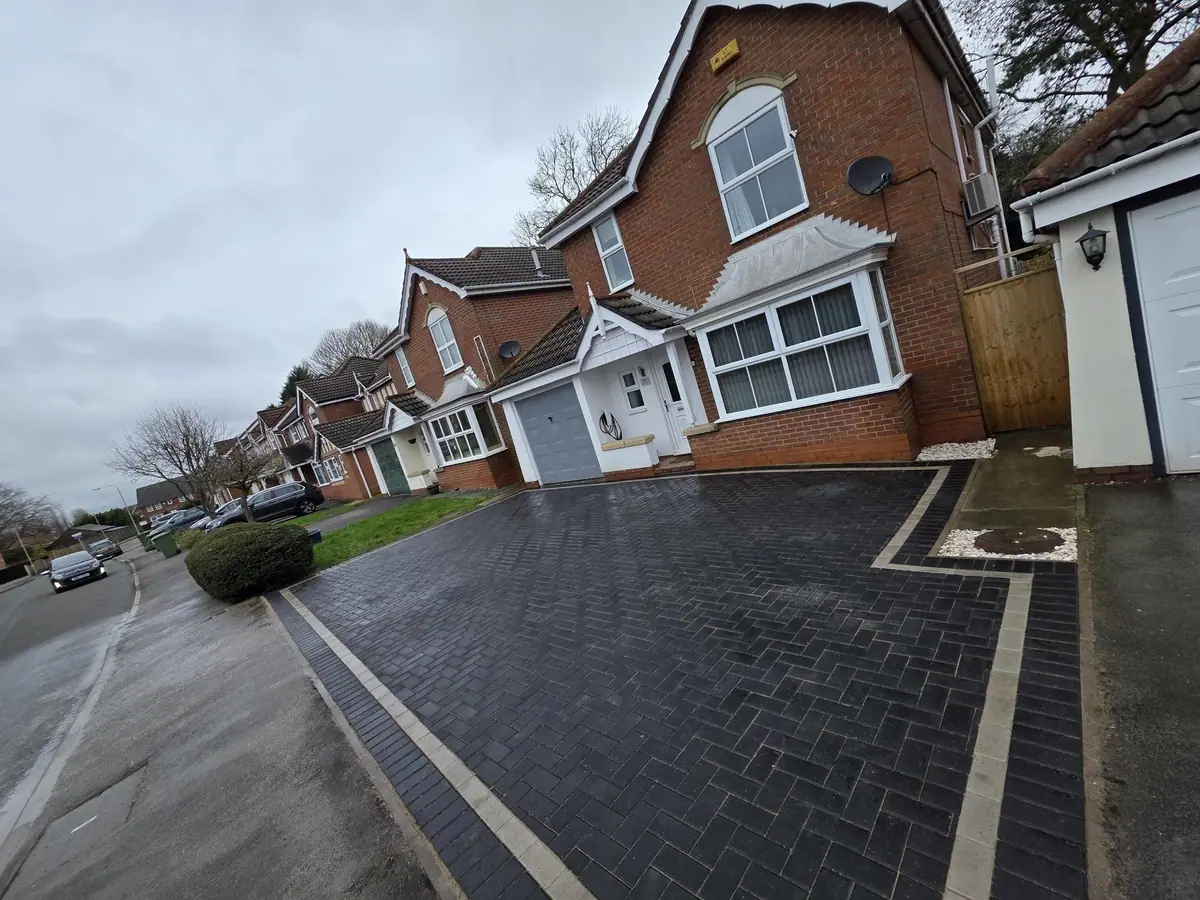
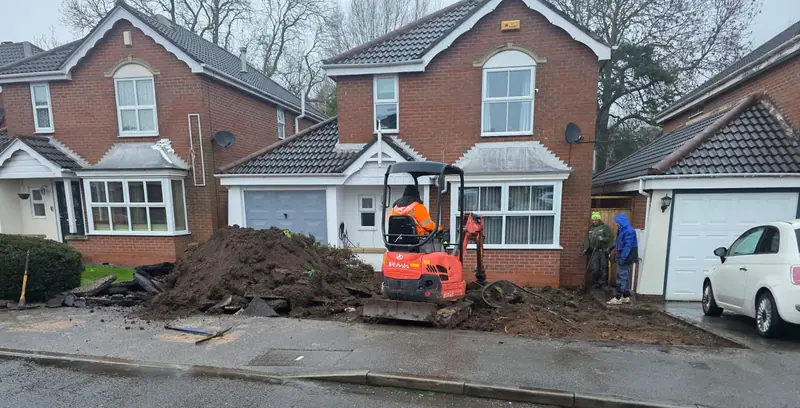
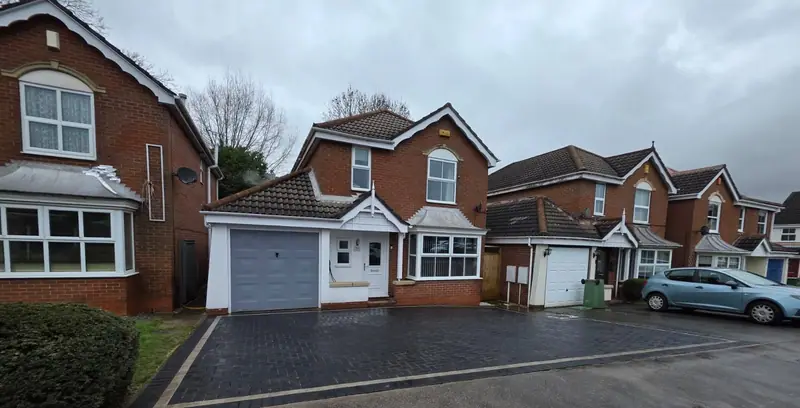
Torn-up frontage to black block drive. Front garden dug out, then a black herringbone block drive with a cream border laid.
BEFOREAFTER
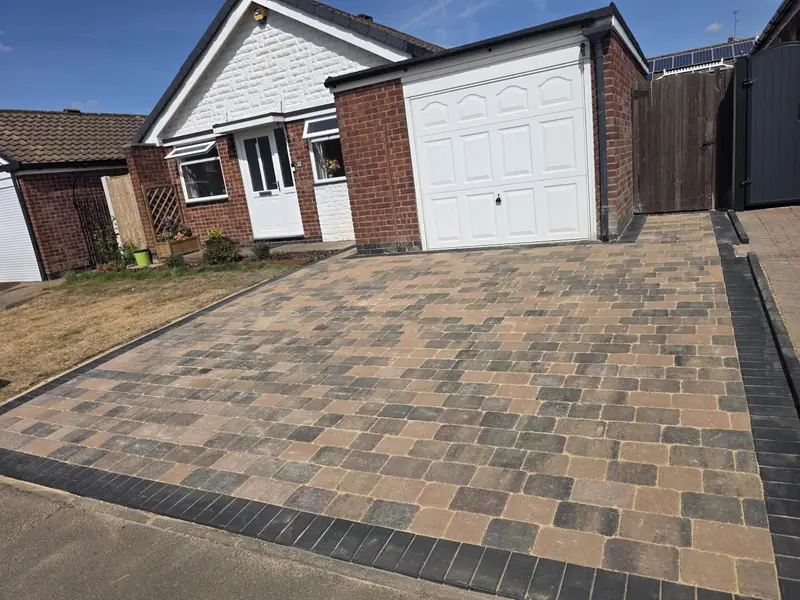
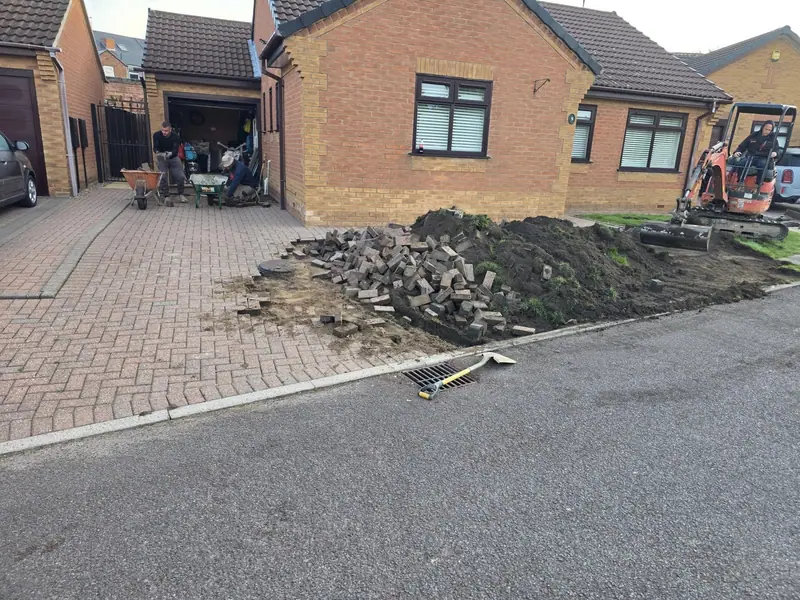
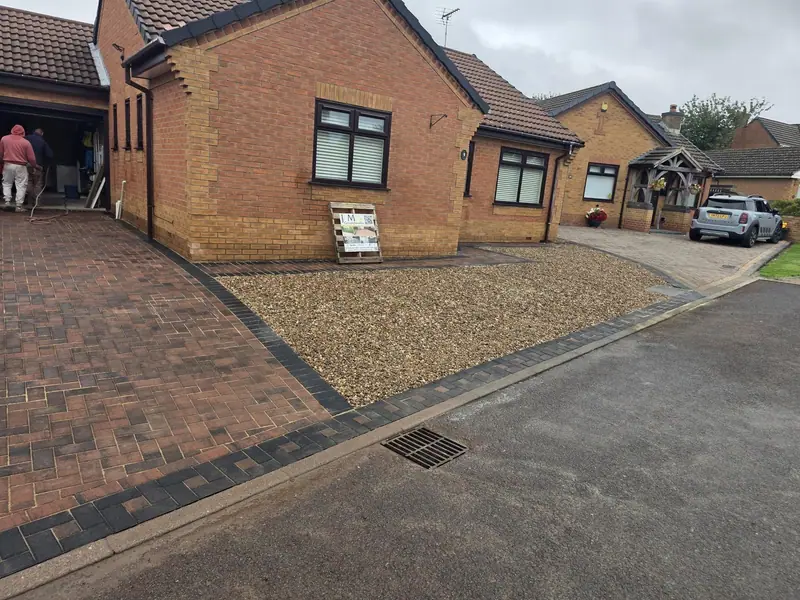
Old paving lifted, new block drive. The old block paving lifted, then new orange blocks with a black border and a gravel bed laid.
BEFOREAFTER
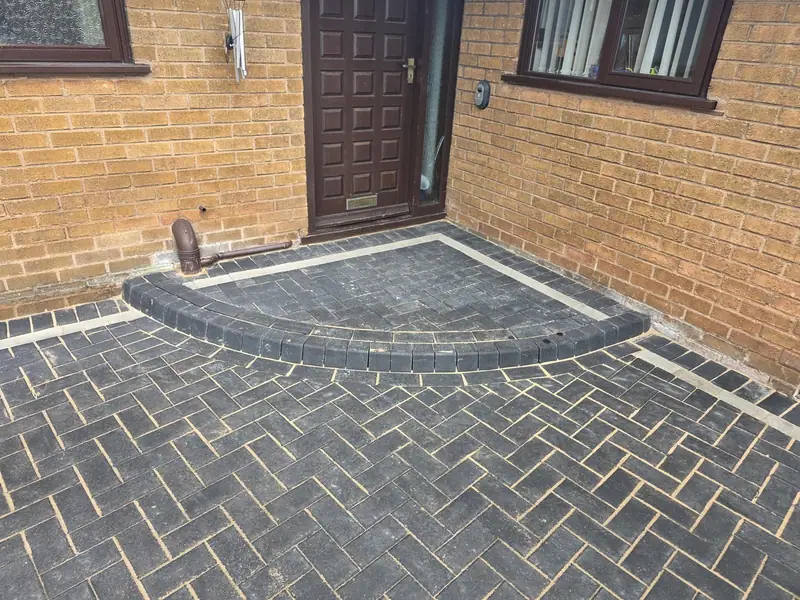
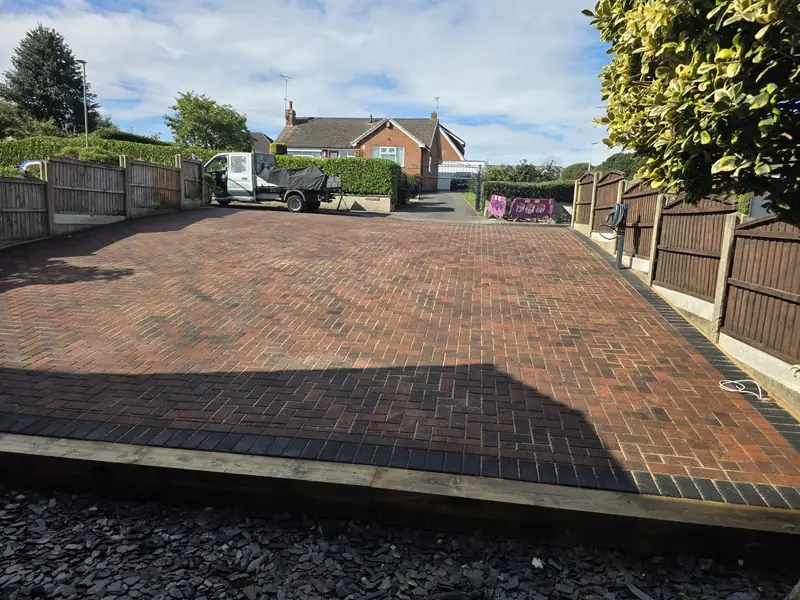
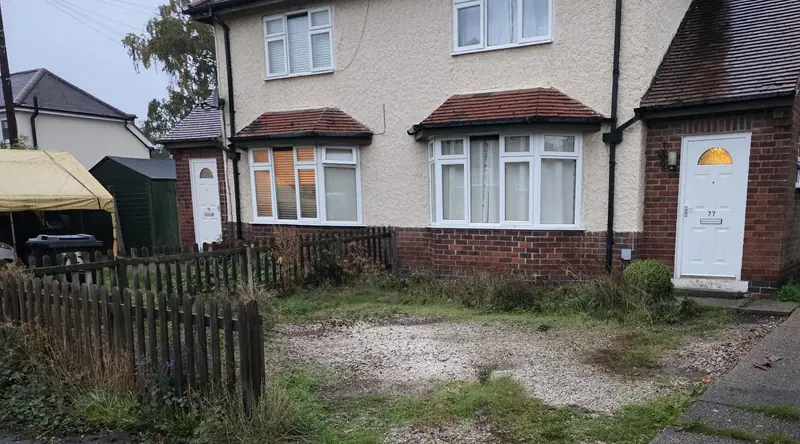
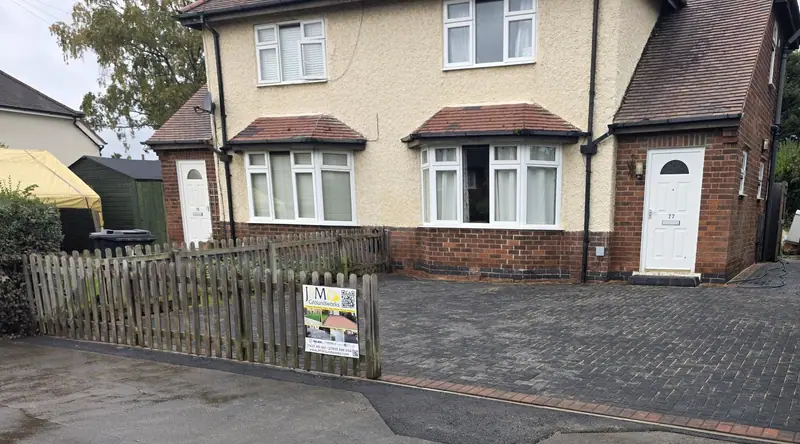
Overgrown frontage to block drive. Overgrown frontage and a cracked path replaced with a dark block paved drive.
Block paving questions
Can't see yours? Ring the freephone — you'll get one of us, not a call centre. All FAQs.
How much does a block paving driveway cost?
Around Mansfield and the NG17–NG20 postcodes, expect £100–£130 per m² supplied and laid, depending on the blocks, the amount of cutting and whether drainage or a dropped kerb is needed. A typical two-car drive of 40–50m² lands between £4,000 and £6,500.
Will weeds grow through the joints?
Not from underneath — the sub-base and laying course don't support growth. Anything you do see has blown in and settled on top of the jointing sand, and it lifts with a stiff brush or a wash down. Sealing the drive cuts it down further.
Can you match blocks on an existing drive?
Usually, if the range is still in production. Bring us a spare block or we'll take one off site and match it against the current Marshalls and Brett ranges. On older drives we sometimes lift blocks from a hidden area to patch the visible one.
We use essential cookies to make the site work. We'd also like to use analytics cookies to see which pages people find useful — only if you say yes. Read our cookie policy.