The most common patio fault we're called to is rocking, cracked or hollow-sounding slabs, and the cause is nearly always spot-bedding — five dabs of mortar under each slab with a void in between. Water gets into the void, freezes, and the slab lets go or snaps.
We lay every slab on a full mortar bed on a compacted sub-base, with a primer slurry on the back of natural stone and porcelain so the bond actually holds. Falls are set away from the building at around 1:80, and the perimeter detail keeps water off the wall and away from the damp course.
Full mortar bed under every slab — no spot bedding, ever
Slurry primer on the back of sandstone and porcelain for a proper bond
Falls set away from the house, 150mm clear of the damp proof course
Brush-in or slurry jointing depending on the stone and the joint width
Cuts made with a wet saw so edges and thresholds sit tight
Stone and finishes
We'll bring wet samples. Every natural stone looks different soaked than it does dry in a showroom.
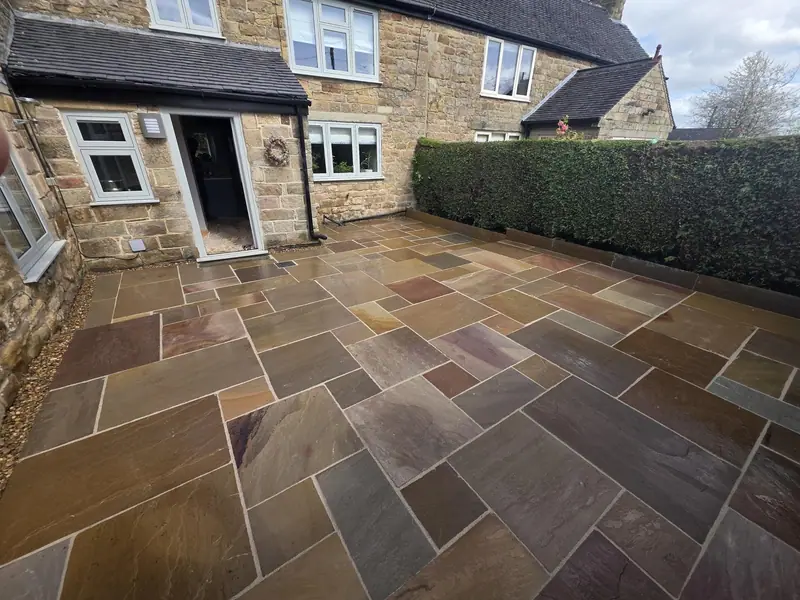
Indian sandstone
Warm, riven, forgiving on cost. The best value natural stone and still the most popular.
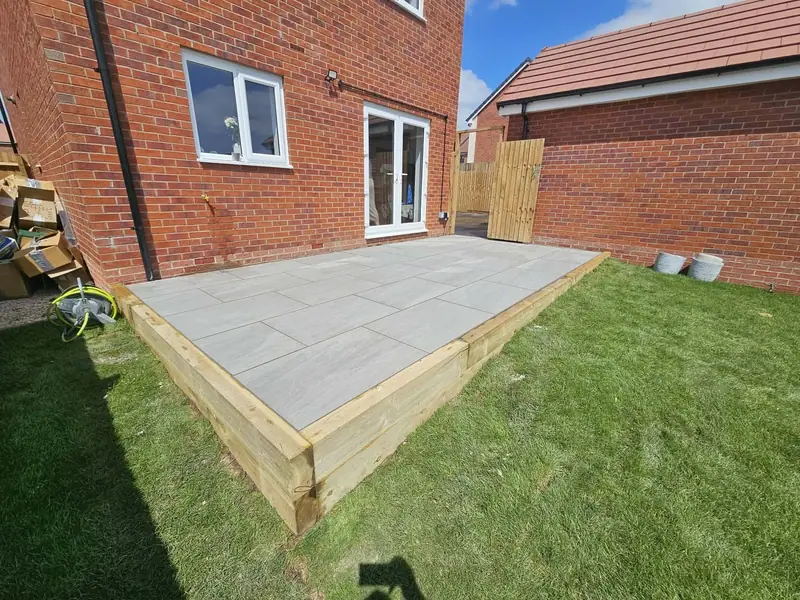
Porcelain
Dead flat, frost-proof, doesn't stain or need sealing. Dearer to buy and to lay, cheapest to live with.
Limestone
Smoother, more uniform tone than sandstone. Handsome, but shows staining more readily.
Concrete slabs
Marshalls and Bradstone ranges. Consistent sizing makes them quick to lay and easy to budget.
Steps & coping
Bullnose treads and matching coping to walls, cut from the same batch as the patio.
Sealing
Optional on sandstone and limestone. Cuts down staining from planters, barbecues and leaf fall.
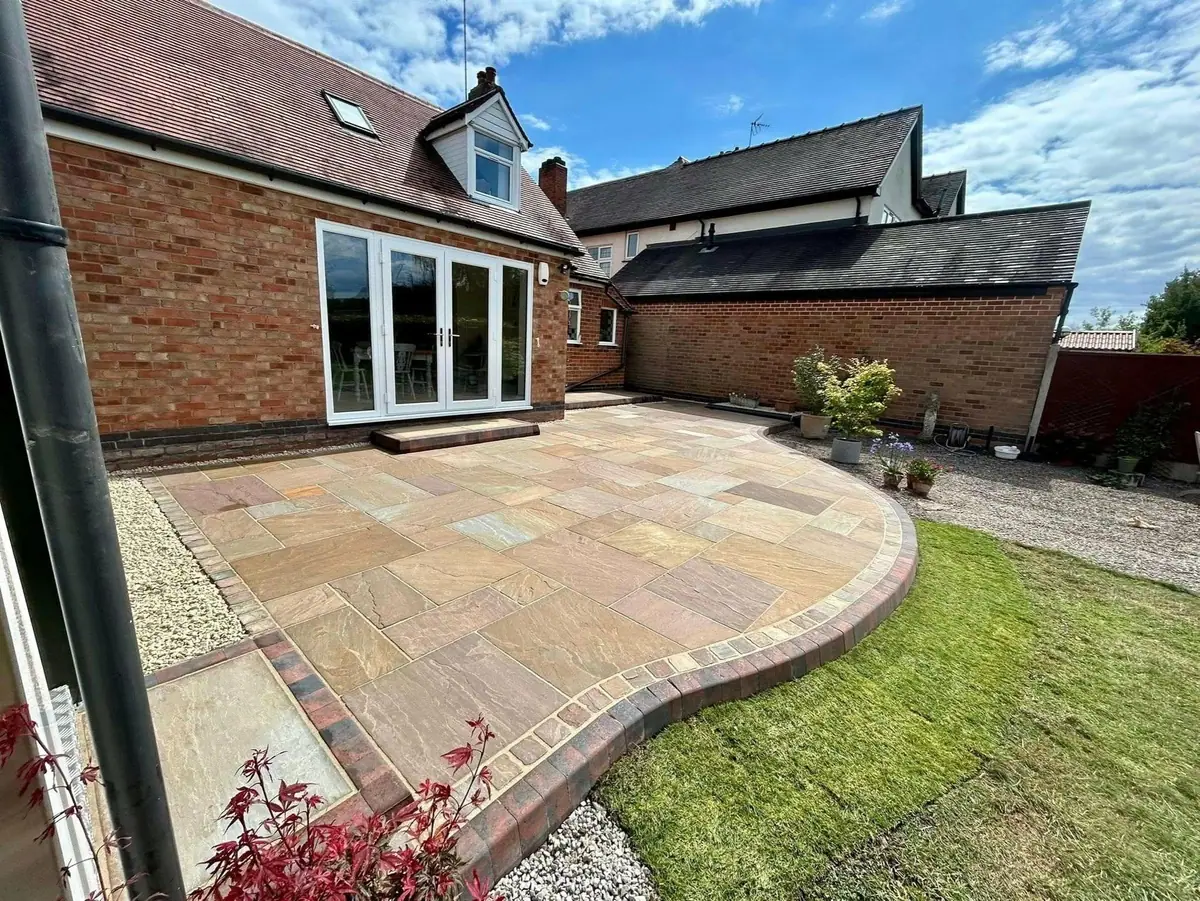
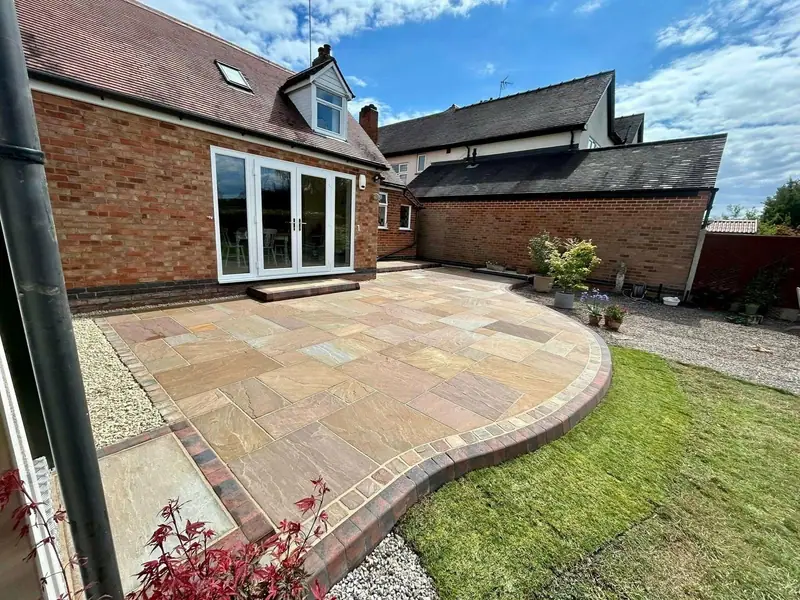
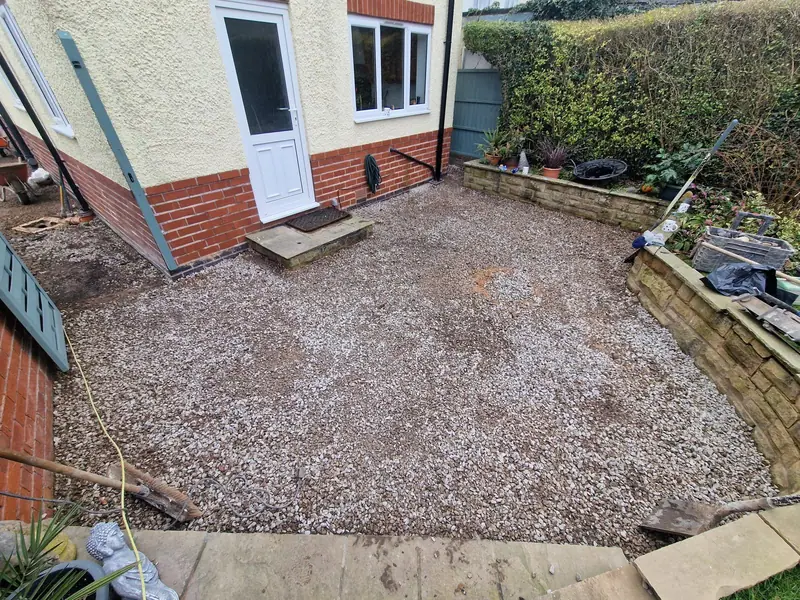
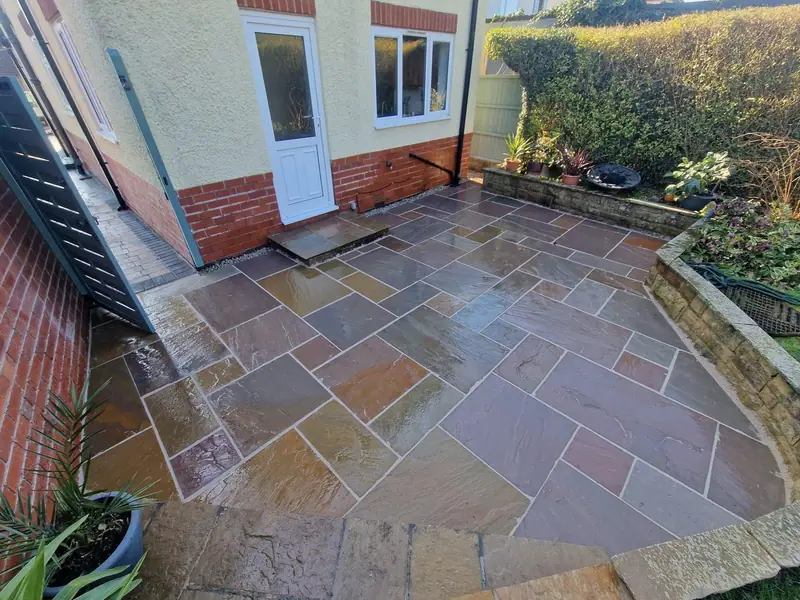
Gravel yard to sandstone patio. The gravel yard by the back door replaced with a multicolour sandstone patio.
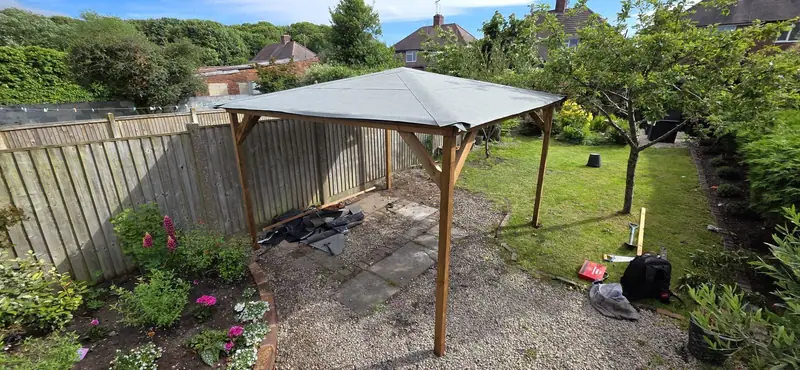
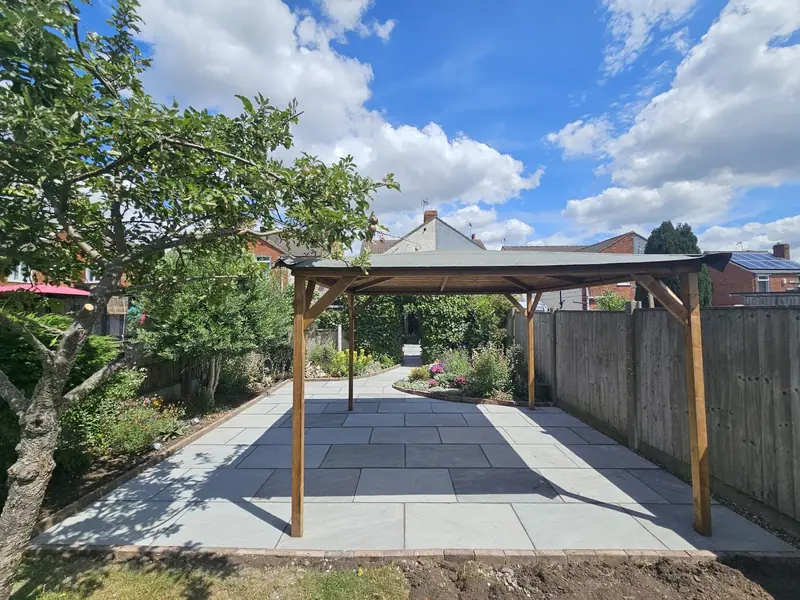
BEFOREAFTER
Gravel pad to grey sandstone patio. Gravel under the timber pergola replaced with grey sandstone paving.
Slabbing & patios questions
Can't see yours? Ring the freephone — you'll get one of us, not a call centre. All FAQs.
How much does a patio cost?
£120–£160 per m² supplied and laid. A typical 25m² patio comes in between £3,000 and £4,000.
Does a patio need sealing?
Porcelain doesn't. Sandstone and limestone don't have to be sealed, but it makes barbecue grease, planter rings and leaf tannin much easier to shift.
Can you lay a patio over my existing one?
Only if levels allow it and the existing base is sound and well drained — and it usually raises you too close to the damp course. Nine times out of ten we take it up.
We use essential cookies to make the site work. We'd also like to use analytics cookies to see which pages people find useful — only if you say yes. Read our cookie policy.